Give completion one meaning
A habit becomes hard to review when “done” changes from day to day. Write a definition that another person could apply to the same event.
Free custom tracker worksheet
Define a field, unit, target rhythm, context note, and review question for something ordinary tracker categories do not cover well.
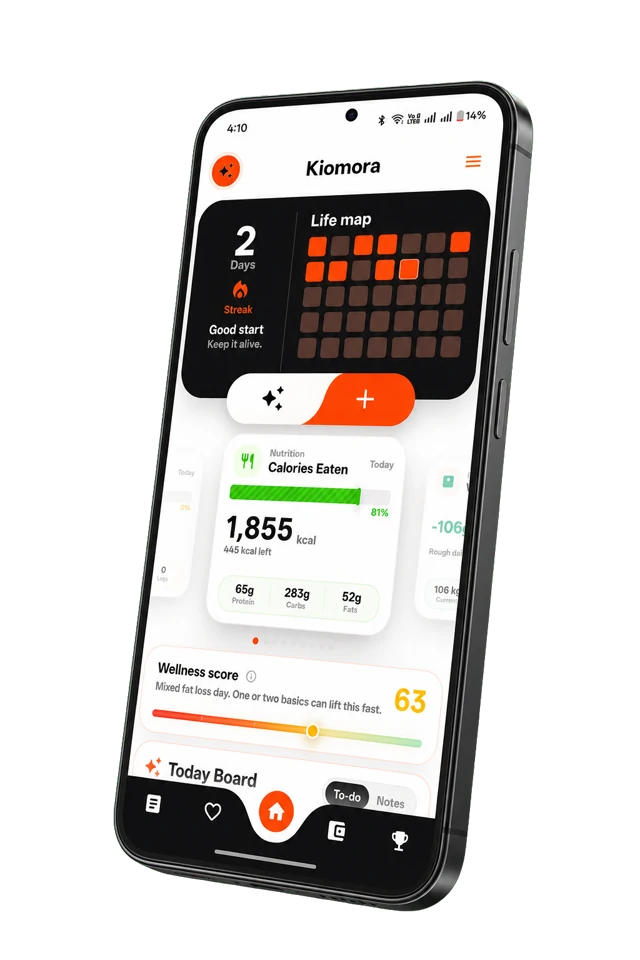
Track your whole day
Food, sleep, movement, spending, notes, habits, and memories stay connected in one personal record.
Explore KiomoraCopy it into a notes app, download the plain-text file, or print this page. Leave a field blank when it does not improve the later review.
CUSTOM TRACKING WORKSHEET

TRACKER NAME:
What does one entry represent?

FIELD DESIGN
Field or behavior:
Type: yes or no / count / duration / quantity / short note
Unit, if any:
Target, if useful:
Planned days:

CAPTURE
When will I record it?
What evidence counts as complete?
What counts as rest, skipped, or not planned?
One optional context note:

REVIEW
Review date:
What total, rate, or pattern will I calculate?
What question should this tracker answer?
What result would make me change the setup?

BOUNDARIES
What will I not infer from this tracker?
When will I stop or archive it?

Note: Keep the definition stable during a review period. Change it between periods and record what changed.
Completed example
The example limits the record to fields that support one review question. It also names what the tracker cannot prove.
Tracker name: Phone-free meals
One entry: One meal completed with the phone outside the room

Type: Count
Unit: Meals
Target: 1 meal per day
Planned days: Monday to Sunday
Capture: Tap once after the meal
Evidence: Phone stayed outside the room until the meal ended
Rest or skipped: Meal eaten while travelling
Context note: Who I ate with or what interrupted the plan

Review: Every Sunday
Calculation: Completed meals divided by planned meals
Question: Which meal is easiest to keep phone-free?
Boundary: This does not measure relationship quality or attention
Archive: After four weeks or once the routine feels automatic
A habit becomes hard to review when “done” changes from day to day. Write a definition that another person could apply to the same event.
A planned rest, an unavailable opportunity, and a missed planned action are different states. Separating them produces a more honest consistency rate.
Use the first version for at least one review period. Add a field only when the review reveals a question the current record cannot answer.
Use the matching free tool to test the workflow before committing to a long tracking routine.
Turn the plan into a printable tracker