What should I track every day?
Track only information you expect to review. A practical starting set is one sentence about the day, sleep, energy, mood, movement, meals, focus, spending, and one memorable moment.
Free daily life tracker template
Use this flexible template for wellness, routines, spending, focus, and memory. Copy it into any notes app or download the plain-text version.
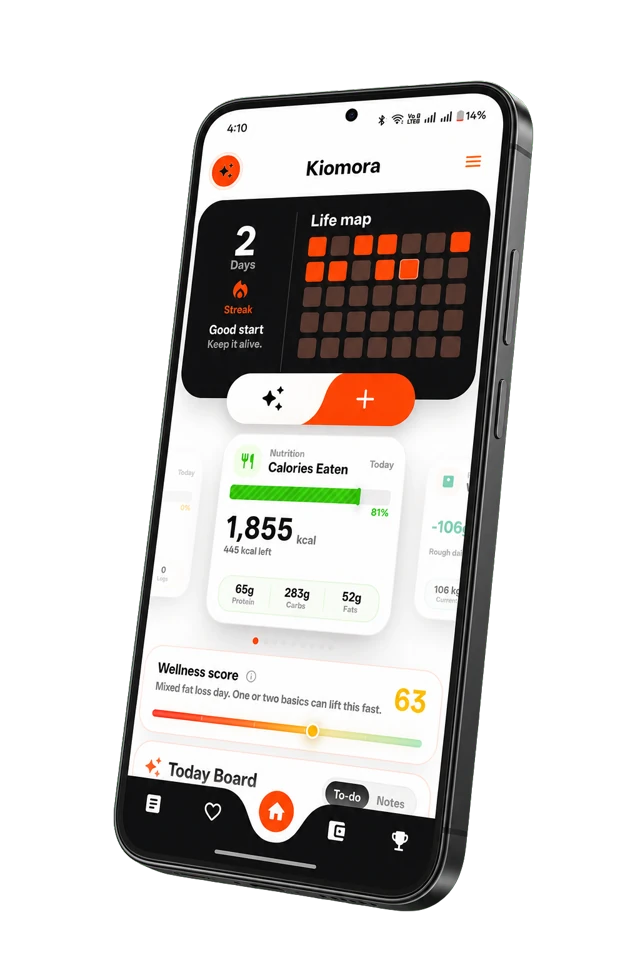
Track your whole day
Food, sleep, movement, spending, notes, habits, and memories stay connected in one personal record.
Explore KiomoraReady to copy
Use the 60-second log on ordinary or busy days. Use the full tracker when you want more context for a weekly review. Both are plain text, so they work in any notes app.
Six prompts for a recognizable day without a long form.
60-SECOND DAILY LIFE LOG

Date:
Today in one sentence:
Energy, 1 to 5:
One thing I completed:
One moment worth remembering:
Tomorrow needs:

Note: Leave a field blank when it adds no value.
More context for sleep, routines, spending, people, and memory.
DAILY LIFE TRACKER

Date:
Today in one sentence:

FOUNDATIONS
Sleep:
Energy, 1 to 5:
Mood, 1 to 5:
Movement:
Meals or food notes:

DAILY CONTEXT
Main focus:
Habits I want to remember:
Spending or purchase notes:
People or places:

REFLECTION
One win:
One difficult moment:
One moment worth remembering:
Anything to revisit later:

Note: Use only the fields that help you. This template is for personal organization and reflection, not medical or financial advice.
| Field | Why keep it |
|---|---|
| Today in one sentence | Creates a quick memory anchor for the whole day. |
| Sleep, energy, and mood | Preserves how the day felt without pretending the values explain why. |
| Movement and meals | Keeps broad wellness context together when it matters to you. |
| Focus and habits | Records what received attention and what routines actually happened. |
| Spending or purchases | Captures everyday financial context without replacing a budgeting system. |
| One memorable moment | Makes the record useful for memory, not only measurement. |
Completed example
This example keeps measurements factual and gives them human context. It records what happened without claiming that the walk, sleep, or lunch caused the day to feel a certain way.
Date: Friday, July 10
Today in one sentence: A scattered workday ended with a calm walk and dinner with Maya.

Sleep: 6 hours 45 minutes
Energy, 1 to 5: 3
Movement: 35-minute walk after work
Main focus: Finished the client draft
Spending: 1,200 on groceries
One win: Sent the draft before dinner
One difficult moment: Lost focus after lunch
One moment worth remembering: Maya told the train story again and we laughed through dinner
Anything to revisit later: Try the walk before the afternoon work block
A tracker becomes useful when the record changes what you remember, question, or do next. Use the weekly review to turn seven separate days into a small, understandable summary.
Open the weekly review templateTrack only information you expect to review. A practical starting set is one sentence about the day, sleep, energy, mood, movement, meals, focus, spending, and one memorable moment.
No. Delete fields that do not help you and leave occasional gaps without treating them as failure. Consistency matters more than a perfectly complete form.
A useful daily log can be a few lines. Add detail when something is worth preserving, but keep ordinary days easy enough that the record remains sustainable.
A tracker usually uses repeatable fields, while a journal gives more room for open reflection. This template combines both by pairing structured context with a short memory note.
No. A personal record can help you notice what happened around the same time, but it cannot establish a medical cause or replace professional care.